Category

Blog

house mold removal

What to Do About Mold in Your Home

By Blog

kansas city restoration services

Before you try to tackle a mold issue in your home, there are a few things you should know about mold overall.

The first thing to understand is that mold is a part of nature; it is a fungus, a living organism, whose purpose is to decay organic material. You can very much think of mold like a termite but on a much smaller scale. Their job is to help get rid of organic material.

Mold in various forms is everywhere. It is estimated that there are over three-hundred thousand species of mold. There are molds for every environment; whether it is hot or, cold mold will exist.

When I ask any one of the general population which mold is the most dangerous, they will invariably say black mold. The reason people say black mold is because the news media in the 1980s ran many stories about the dangers of black mold. So much so they scared the entire population into believing it was so dangerous their children would suffer brain damage and other developmental problems. 

But the media never told us that everything they were reporting about black mold is that their claims have never been proven. Even to this day, in 2020, they have never been proven.

You should know the media was speaking about Stachybotrys chartarum mold. It is only found indoors, so you will not find it outdoors. Second, hundreds of mold species are black, so when you look at a black mold, it isn’t necessarily Stachybotrys.

Other molds are dangerous to the human environment. The first and most prevalent is Aspergillus fumigatus. This mold is called black mold on fruits, but it may appear greenish to pinkish cast in color and have fuzzy white fungus intermingled in other structure areas. 

Aspergillus niger mold is almost everywhere in the United States, outdoors and indoors almost every day. We are used to breathing this mold without getting sick.

Aspergillus mold carries mycotoxins and left in the area to grow, can cause a lung disease called Aspergillosis. Aspergillosis sets up and grows in the bronchial and lung areas of its victim.

The difference between not contracting Aspergillosis or not first lies in your genetics. After that, it is from living or working in closed quarters with concentrated amounts of the mold. Being in close contact with more massive amounts of this mold is called a bioload. The greater the bioload and the longer the contact presents a greater chance of developing Aspergillosis.

Because Aspergillosis is not a reportable disease, it’s hard to know how many have succumbed to the disease. It is estimated worldwide that at least 3,000,000 people contract Aspergillosis each year, with a 15% mortality rate. Many of those who do not die are respiratorily compromised for the rest of their lives.

Of course, anyone who is allergic to mold(s) are at risk of many related immune problems and should be diligent about its eradication. 

NOVICE v. PROFESSIONAL

The format professionals will be different from a homeowner attempting to remediate the mold. This writer recommends the homeowner attempt to remediate the mold only for small areas.

In the eyes of the novice, cleaning mold should be different than remediating the mold. For the sake of this instruction, Cleaning the mold represents having minimal amounts of mold around your tub or shower, and you have a returning fungus you attempt to get rid of using bleach or some other disinfectant. It disappears for a while, then reappears later.

If this is the case, then more than likely, you have some water intrusion that needs attention.

If this is a caulked seam, you can remove the caulk from that seam, then apply your disinfectant, allow it to thoroughly dry and replace the caulk. If the mold persists or the mold is in the grout, the problem just gained importance in how it should be handled.

Although you are beginning to approach the professional level, your skill sets might allow you to proceed. 

Apart from the professional’s negative air chamber with Hepa filtration, I suggest you drape the doorway with a plastic sheet. That way, when the door has opened, a barrier exists.

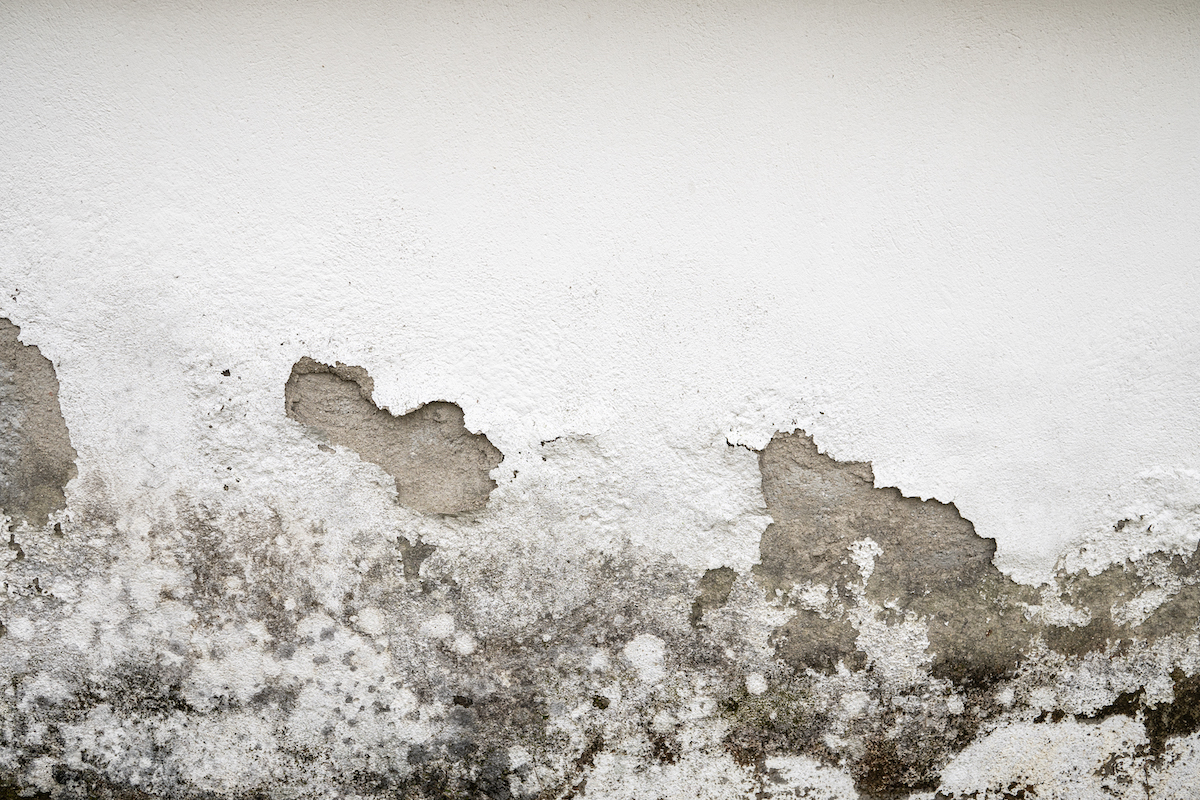
If the mold is in the grout, it usually means there is a water intrution behind the wall. Think about it. Grout is not cellulosic; it’s cementitious. Household mold loves dark, stale, humid, or wet air that you would find in the wall void with a water leak present. The leak could be from a roof leak or a pipe fitting.

Professionals use an inferred camera and inspection to determine how the water may be intruding. Here’s what I mean. Is there a water pipe in the area that might be our culprit? If not, then a trip into the attic might enlighten us on an area of the leak. We would look for apparent water damage in the attic, or if not that, then dark streaks on the wood structures in the wall area in question. 

While you are in the attic, inspect the whole of the roof area for leaks, it may reveal extensive damage that indicates a roof replacement.

Suppose no visible damage is discovered in the attic or suspect pipe in the area. In that case, you must conclude that the water intrusion is from water going through the tiled wall; you must open up the wall to inspect, revealing water damage indicating the source. If water is seeping through the tile and onto the wall, the wallboard will be wet and will likely crumble easily with little pressure. Before getting aggressive with the wall’s demolition in a question, apply hand pressure to the wall area where you see the mold. Is the wall spongy or stout?

If it’s spongy, then you found the issue. It’s time to complete the demolition and proceed with the rebuild.

If your problem was a roof leak, have the roof fixed.

If it was a pipe leaking, have it repaired,

If it was a wall, our suggestion is to build it back using the concrete board or green rock and use a liquid waterproofing membrane to be applied like paint on the wall before retiling the surround. A membrane will thoroughly protect the wall in case there is water intruding any time in the future.

If this seems more daunting a task than you’re up to, then give us a call. First Call Restoration of Kansas City, 913-909-0142 KS, for Missouri call, 816-804-0154.

We will come to your location for a free inspection and quote.

Are you strapped for CASH? Don,t worry. We have you covered with Low payment options.

By Don M. McNulty
First Call

Free Mold Inspection

By Blog

This year 2020 has brought our society a pandemic that had us all sequestered in place, made us afraid to go out to shop, visit friends and family, work, and have caused many businesses to be hurt or, worse yet, closed. Also, the allergy season was rough for those who suffer those maladies. But here in the Greater Kansas City Area, we missed out on certain weather events. Although our rainfall has been average for the most part, we didn’t have many thunderstorms or severe weather.

Consequently, for as much as we could, we’ve spent time outdoors in our yards, many people started gardening again with many for the first time. Several of us kept close to family, and small groups of people we knew were taking precautions as we were practicing.

Now, as I’m writing this piece, it is the first day of fall. Here in the KC area, the weather has already moderated, and we have had cool nights with warm, moderate days. To me, at least, weather-wise, it’s a perfect entrance into fall, so far.

As the weather progresses toward winter and the coming cold forces us indoors, you may discover or suspect you have mold brewing in your home or business.

If that is the case, First Call Restoration of Kansas City can help provide a FREE MOLD INSPECTION. If you are like me, I don’t like not knowing if I suspect a problem developing; I like to know.

The only way to know is to have those areas inspected. With mold, the adage applies, the sooner this problem is found, the less expensive the repair.

If you suspect mold being present in your living or work environment, don’t put off the inspection. It’s a straightforward and painless call to First Call Restoration 816-804-0154 in Missouri or 913-909-0142 in Kansas. You may find our website at www.firstcallrestorationkc.com

We cover the entire metro-plex from Harrisonville, MO to Oskaloosa, KS and Lawrence, KS to Odessa, MO.

Please don’t put it off; give us a call today.

Step-by-Step: How to Clean Up Spills in the Workplace

By Blog

Have you ever slipped, tripped or fallen at work? Perhaps you have watched a television show where a slip, trip and fall was the punch line for a joke. Slips, trips and falls are no joke however, and rank among the most frequent types of accidents, second only to motor-vehicle accidents as a cause of death. According to the Bureau of Labor Statistics, “26% of the 8982,730 nonfatal work injuries resulting in days away from work in 2017 were related to slips, trips, and falls. With 44% of Society Insurance claims are related to slips and falls (general liability and workers compensation), businesses can’t afford to not take additional precautions when it comes to cleaning up spills in the workplace.

How to Clean Up Spills in Restaurants, Bars, Grocery Stores & More

  • Identify that a spill has occurred and make sure the source of the spill has stopped making the spill worse.
  • Display wet floor signs to alert customers that the hazard exists.
  • While you retrieve the spill clean-up kit, have someone stand by the spill to alert customers to the spill. Never leave a spill unattended.
  • Sweep up broken glass or other debris.
  • Slop mop the area using an enzyme-based floor cleaner. Leave the chemical to ‘cure’ according to manufacturer guidelines.
  • Leave the wet floor signs in place until the area is completely dry.
  • Brush floor with a stiff bristled brush.
  • Use a squeegee, wet-dry vacuum or dry mop to ensure the area is dry and there is no trace of greasy residue.

Evaluate the Size of the Spill

Before attempting to clean up spills, take the size into consideration. Large spills should be cleaned up slightly differently than a small spill. For example, you wouldn’t attempt to clean up a gallon of spilled liquid with paper towels. Whatever the size of the spill, clean up spills with the appropriate equipment and correct chemicals.

Determine What Was Spilled on the Floor

The more you know the better you can assess and effectively clean up spills in the workplace. Sweet substances like soda, syrups, and high sugar items will likely leave a very sticky residue on the floor. The cleaning chemical used to clean up this type of spill will be different from what you would use on water or more soluble spills.

Tips for Using Floor Cleaning Chemicals

  • Have a systematic procedure for cleaning spills and proper use cases
  • Provide proper training to staff that covers manufacturer guidelines (dry times, etc.)
  • Calibrate pre-mixers
  • Use a deck brush

How to Clean Up Spills by Following Proper Floor Care Procedures

Importance of Slip Resistant Shoes in the Workplace

You may want to strongly consider developing a slip-resistant shoe program, especially if your business is a restaurant or auto service venture. Make slip-resistant shoes a part of the uniform and assure that managers follow up with team members regularly.

Read, ‘Slip-Resistant Shoes for Employees.

Complete Regular Floor Audits

floor audit or walkway audit is a risk control service designed to reduce the risk of slip and fall injuries. Completing a floor audit and developing a plan to improve floor traction will help to prevent costly customer and employee slip and fall claims in your restaurantbar, or workplace.

Facts About Slips, Trips and Falls

More than a million people suffer from a slip, trip or fall injury each year; over 17,000 die as a result of a slip and fall alone. Between 20% to 30% of people experience an injury after falling, with an estimated 8.9 million visits to the emergency room every year. The long-term effect of these incidents can increase insurance rates, which leads to an increase in insurance premiums. They not only have a financial impact, but also a personal cost with the temporary or permanent loss of a valued member of the community.

Slips, trips and falls can be a significant problem for a business. However, recommended controls can assist management in avoiding these costly, disruptive and painful occurrences. Customers and employees alike will appreciate the increased effort to improve safety.

Download White Paper: Mitigating Slip & Fall Risks

In this whitepaper we discuss:

  • Identifying and controlling risk.
  • Role of education and training.
  • Employee-specific concerns.
  • How to respond to a slip, trip or fall.

If you’re interested in learning more about how to clean up spills in the workplace, browse our Slips, Trips and Falls blog series.


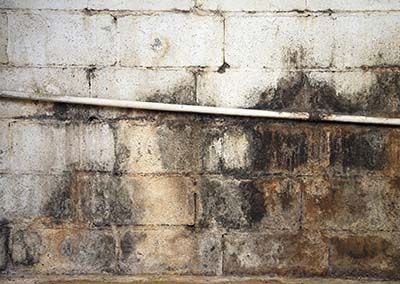
Severe water damage on a cinderblock wall in a neglected basement. Its covered in dirt, cracks, mold and mildew.

Is there a Way to Prevent Phantom Water Damage

By Blog

Phantom water damage happens without your conscious knowledge. It’s taking place in your attic,
under the house in the crawl space, within a wall somewhere in the house. How can this happen? Is
there any way to prevent it from happening?

Evenings in my house after the kids go to bed, I was able to settle in and watch a couple of the television shows. A good western or some cop show, something to provide a little drama and disconnect while I relaxed before bed.

A few times during the programing change there were brief moments of silence my ear would catch a
strange noise; something that sounded like a faucet dripping. I’d get up from of my chair, walk to the
nearby restroom and kitchen to turnoff a faucet I thought I heard dripping. Flipping on the light I
wouldn’t see the faucet dripping in either room. It baffled my mind but I’d want to set back in my chair
and finish watching my shows, so I’d let it go. The noise was kind of funny though. Some evenings I
would hear it quite plainly and others I couldn’t hear it at all. But I just couldn’t nail it down. I even
talked myself into believing it was the large clock on the wall ticking.

I don’t know why I didn’t pay greater attention to it, but for some reason it didn’t seem pressing and I
just let it go. After all I didn’t see anything dripping, no harm…no foul.

After a short while maybe two to three months, I can’t really remember, we would come home from a
visit or errand-run and when we first walked into the house my wife said she could smell something
funny. I couldn’t smell anything and when I asked her to describe the odor, she couldn’t place her finger on it and I just played it off as something being in her head and I really wasn’t interested in pursuing any investigation because I wasn’t sure what to do…I didn’t smell anything.

Not long after the tip-off from my wife, I’d come home from work and began to smell something funny. I admitted to my wife I could now smell it but then once again we couldn’t tell where in the house it was coming from. Not long after that the smell turned to a musty odor. That’s when it finally caught my attention and I knew I had a problem. Now I just had to locate it.

For the next few evenings after dinner I’d make a walk through the house looking for the problem. I
looked under every sink even the ones not near the living room. I when down to my partial basement
and looked and around the last night I crawled into the crawlspace and looked it all over. I’m glad to
report everything was dry as a bone.

I have a friend in the water restoration business and I thought I’d call him and ask if he couldn’t come
over to reinvestigate. The following Saturday he came over bright and early and asked for my ladder and the attic access. Attic, I thought…crap the only place I didn’t look in. When he opened the access door to the attic the whole house immediately filled with a strong aroma of mold. As we climbed into the attic, sure enough not far from where I sit in the living room was ground zero. My roof had developed a small leak and as the snow melted it was dripping through this very tiny hold in the roof.

Funny thing about attics, they usually are extremely dry. Because of that, being dry, when water is
introduced to the substrates they absorb it quickly and as I found out very quickly. Mold loves three
things. It loves “dark, stagnant, damp areas,” everything my attic provided, so, the mold….it grew
exponentially. Not only did the mold grow in the attic, the water found its way down the adjacent wall
void and a wall provides the exact same environment as the attic. Guess what we weren’t done yet. That wall void went into a nearby closet of a very seldom visited third bedroom. Wow, once we opened the door to the closet, oh man, it was evident the closet and many of the clothes stored there were ruined.

Now, I’m really scared. Can I even live in this house? Should I, my wife and kids pack up and move to a hotel. The mold looked black to me and I saw those television shows Dateline or 20/20 or some such
station that this stuff can kill you.

Luckily, my friend calmed us down and we made a plan to get this taken care pronto. I called my
homeowners insurance 24-hour claims number and got claim submitted. They gave me a claim-number to give to my friend’s company and he called his office and turned in the job and we were off and running.

It turns out that whatever television show I had been watching un-necessarily hyped up the dangers of
“Black-mold.” It’s not black mold we really have to watch out for, it’s kind of a blueish/greenish color
mold called aspergillus ssp. This mold can actually cause lung problems to the point of killing you and it’s far more prevalent than the black mold. But it’s not casual contact you have to worry about its on-going contact; it’s living with the mold on a continual basis. If we had continued to live in that house with that mold and ignored all the signs…I and my entire family could have been comprised.

If you live in the Greater Kansas City Area and think you may have a problem…call Frist Call Restoration KC at 816-804-0154. They’re experts in water mitigation and mold remediation. They work with all property insurance companies in our region and they will respond promptly.

BY DON M. MCNULTY, MBT, MTC, OSHA APPROVED TRAINER ©COPYRIGHT 2018

water damage restoration

Water Damage to Your Home, What are the Top Five Problems

By Blog

Water as a flood inside your home can be devastating. I know, I’ve had a supply line fitting to our dishwasher break open and flood our kitchen while the dishwasher was running. When my wife called me in a panic at work, I instructed her to shut off the water to the dishwasher. She opened the door to the washer, which caused the machine to stop running and walked to the other side to start calling the insurance and restoration company. As I walked into the house the dishwasher was still gushing water. I ran downstairs to the basement and shut off the water to the entire home. My wife explained, she thought by stopping the machine from running the water would stop. The problem was the break in the line was ahead of the actual control of the machine. So the water ran a good 40 to 50 minutes before I arrived.

Here’s our damage; our pre-finished hardwood floor in the kitchen was only 6 months old. It had to be replaced. The water ran down to the basement, which was unfinished but used for storage. I kept my extensive 30-year-old library of business and religious books on three large bookshelves for easy
retrieval and I lost roughly half of my collection and the bookshelves.

We were, of course, displaced from the kitchen for one week while the dry down process proceeded. The machines are really loud and it was next to the living room so having a conversation or watching television was extremely difficult. Then we had to wait another 2 weeks walking on cupped hardwood flooring while the adjuster got everything approved and for the new flooring which was ordered and arrived. We were displaced from the kitchen once again for a few more days while that work proceeded.

That was water running uncontained in our kitchen for approximately 45 to 50 minutes. Think about a second-floor wash machine fitting failing while everyone has gone to work and the water is allowed to run unabated for hours before someone returns; (It happens all the time). The washer’s water line is twice the size of my dishwasher line. These things happen all the time. In fact, in the Greater Kansas City Area, there are hundreds of water
damage calls each month on a regular basis. When the area suffers a cold snap of two or more days the numbers goes up exponentially.

HERE ARE THE TOP FIVE PROBLEMS

  1.  Plumbing Failure. Dripping faucets and leaky pipes that are being ignored.
  2.  Toilet overflows. When this happens it is considered a Category 3 (contaminated) water loss
  3. Slow or Clogged Drains causing backups
  4.  Wash machine hose failure
  5.  Sump Pump or Water heater Failure

Mechanical failures happen, that’s just a simple fact. Things just wear out but many times they give us some sort of warning. Leaky pipes and fixtures are the number one indicator. These issues should be taken care of immediately to prevent greater damage. Others require a more proactive action through inspection. Such as, taking a large bucket of water or a garden hose down to the sump pump to fill the pump well, making sure it comes on once the float is triggered as you fill the well. Things to look for, are the slow start or splutter start. Has debris fallen into the well? Does the float work? Does the well empty quickly or slowly once it’s triggered? Of course, slow means you need to do further investigation. Is the outlet hose clogged? Is the outlet hose tight against the fitting? (Since you can’t see the fitting under the water and at the bottom of the well. If the fitting isn’t tight it can leak water at the fitting while trying to empty the well.)

Are you getting all the hot water you need? If the water has been hot but now is not, or do you have rusty water when you first turn on the hot water? You may have a tank failure in your future. Find out the age of your hot water tank. Typically they last 10 -13 years. If it’s older consider changing it out. If it’s more than 15 years old experts say it’s better to be proactive.

The second and third issues usually go together. Many times if you have a toilet back up it comes down to clogged drains. If the toilet is emptying slow or you have to flush twice it can mean you need to adjust your toilet flush valve. You can easily check it by lifting up on the valve manually and if it still doesn’t perform as required this could indicate a clogged drainage pipe and need a drain cleaning service to fix the issue.

About twice a year while doing the laundry check out the hoses in the back of your wash machine. Do they look worn or old? Run your finger around the fittings both at the wall and where it connects to the machine. Does your finger feel wet at all? If so, think strongly about changing the hoses.

If you have a failure and you are in need of the mitigation and restoration company to dry out the structure and make necessary repairs, call First Call Restoration, Inc. of Kansas City at 816-804-0154. We will respond quickly to your problem and get the work done. Many of these problems are paid for through your property insurance. We’ll work with you and your insurance company to see you get the best rates available.


BY DON M. MCNULTY, MBT, MTC, OSHA APPROVED TRAINER ©COPYRIGHT 2018

Dangers of Mold

By Blog

Here at First Call Restoration, Inc. in the Kansas City area, people question us on many occasions about mold with the number one question being, can mold make me sick. The most vulnerable people for mold affecting their health are people who have allergies, asthma, anyone who is immune suppressed and the very old and young. People with allergies can suffer greatly, with itchy watering eyes, sinuses problems, rashes and it can even trigger asthma attacks, which can be dangerous, even leading to death.

Whether or not you’re allergic to molds, mold exposure can still irritate your eyes, skin, nose, throat, and lungs. Physicians report anytime you have a continued irritation, especially, in the throat and lung area can also setup an infection due to soft-tissue irritation.
When the general public thinks of mold in their homes they think about “Black Mold,” which is Stachybotrys chartarum or “Stachy” for short. In my view the public has an unhealthy fear of Black-mold bought about by television news reports and shows like Dateline and 20/20, who misrepresented the effects of “Black-mold.” Much of what they reported has never been proven to be true and it takes away the concern about other molds much more dangerous than Stachy.

If I don’t have to be so concerned with Stachy, then what mold should I be concerned with? The most prevenient mold is Aspergillus mold. It is found almost year around both inside and outside the structure. Of course, we’re only concerned with interior exposure when we find an active growth inside the structure. Prolonged exposure to aspergillus can cause aspergillosis, which is mold growing inside the lung area. Because aspergillosis is not a reportable infection in the United States, the exact number of cases is difficult to determine. Milder, allergic forms of aspergillosis are more common than the invasive form of the infection. The CDC determines based on a few studies that the more invasive type is 1 to 2/100,000 in population, which translates to 3,000 to just over 6,000 cases per year.

There is yet another mold that we should be concerned with but not overly so. That is Histoplasma, which causes Histoplasmosis. There is both pulmonary histoplasmosis (Histoplasma growing in the lung) and Ocular histoplasmosis (which is Histoplasma growing behind the eyeball). The fungus lives in the environment, particularly in soil that contains large amounts of bird or bat droppings. In the United States, Histoplasma mainly lives in the central and eastern states, especially areas around the Ohio and Mississippi River valleys. The fungus also lives in parts of Central and South America, Africa, Asia, and Australia. Area where large flocks of pigeons gather and nest are of particular concern. The mold grows on the bird dung and then when it is disturbed by the bird activity, it is picked up by the wind and then intermingles with the unknowing public. Our main concern as people with this knowledge are that these large flock areas are not being addressed with remediation processes and exclusion barriers being place to prevent further contamination. People can get histoplasmosis after breathing in the microscopic fungal spores from the air or the spores landing in the eye working their way behind the orbit.

One another concern with this mold and that is with people who have pet birds but do not routinely clean the aviary. I personally know of two pulmonary cases where one client passed-away from her infection and another is awaiting a lung transplant.

Mold growing within the work and living environments should be taken seriously. If you believe you have mold contamination in the Kansas City area, please call, First Call Restoration, Inc. a 816-804-0154
• 913-909-0412 we can help with setting up a mold test and mold remediation if necessary.


First Call Restoration
By Don M. McNulty, MBT AT- OSHA, MTC ©COPYRIGHT 2018